
Harm Reduction: A Common-Sense Approach to Addiction
When motorists travel, they wear a seatbelt. When soccer players take the field, they wear shin guards. When construction workers are on site, they wear hard hats and steel-toed boots. Even riskier activities like bungee jumping, rock climbing, and playing football have special equipment and safety protocols in place.
None of these measures prevents accidents from happening. They aren’t meant to. They’re used to minimize negative consequences when they occur. This desire to minimize harm is the idea at the heart of harm reduction.

What is harm reduction, and what does it look like? Harm reduction is a set of practical strategies and ideas aimed at reducing the negative consequences associated with drug use.
Strategies include meeting people “where they are” in their journey, meaning that everyone is treated the same, regardless of whether they’ve just begun using drugs or if they are ready to pursue recovery. Organizations engaging in harm reduction acknowledge the reality that licit and illicit drug use will happen and choose to minimize its harmful effects rather than ignore or condemn them.
In practice, harm reduction may include providing people who use drugs (PWUD) with fentanyl test strips to help determine if substances are contaminated and reduce the risk of overdose. Often, organizations will distribute Narcan to reverse the effects of an overdose if it does occur. Some programs may provide new syringes and sterilization equipment to intravenous drug users to help decrease the spread of blood-borne pathogens like HIV and HCV. Harm reduction strategies also include educating people who use drugs on the importance of safe use practices, like using a tourniquet for intravenous drug use to preserve vein health and cleaning a surface before mixing drugs for use.

Harm reduction creates a unique, judgment-free environment for PWUD to access life-saving resources and services that are often avoided due to stigma. This setting creates an opportunity for PWUD to build relationships and trust with service providers and other users.
While harm reduction-focused organizations can provide resources for safer drug use, they’re also able to connect clients to treatment options or provide a referral when they request more information. It’s important to remember that a main tenet of harm reduction is that organizations or providers use a non-coercive approach. They don’t try to nudge people towards treatment, nor do they measure success by the number of people who’ve achieved recovery.
Despite this, harm reduction can and has led to addiction recovery. In fact, research indicates that new users of harm reduction services are five times more likely to enter drug treatment and three times more likely to stop using drugs than those who do not receive services.
Substance use and addiction are deeply complicated. The sustained abstinence of drug use is unlikely for someone in active addiction, and it often requires vital medication to manage the withdrawals. People sometimes require in-patient medical attention to access the medication they need to abstain from drug use. In most cases, however, PWUD don’t go to the hospital or healthcare providers, which leads to untreated withdrawals. This lack of medication can ultimately lead them back to substance use. Instead, the harm reduction framework views engagement with harm reduction services as the first step towards recovery.
“Recovery is more than just simply quitting a drug, and I think people know that on some level, but understanding that it isn't all mental is important to having empathy and patience for the people in our lives who are struggling with substance use disorder.” said Caila Garcia, supervisor of local harm reduction program SHRED The Stigma
Addiction medicine is essential to recovery, yet we are vastly under-resourced to meet the current need. Additionally, as the drug supply constantly changes and polysubstance use increases, medicine and treatment are always playing catch-up.
These issues cannot be fixed overnight. Substance use disorder cannot be treated with incarceration. Instead, harm reduction seeks to fulfill a more immediate objective, keeping our neighbors alive long enough to achieve a healthier future.

Common Objections Against Harm Reduction
Most people agree that addiction recovery is important and that successful programs should be supported. At the same time, there are many misconceptions about what harm reduction is and its impacts. Much of the criticism around harm reduction is anecdotal. Breaking down the stigma with research and data sounds simple, but these ideas and preconceptions persist even among lawmakers and those who have the power to decide whether harm reduction practices remain legal and whether successful programs get funding.
Syringe service programs (SSPs), which distribute clean syringes, are a common component of many harm reduction programs and are sometimes misunderstood.
One misconception is that SSPs contribute to increased crime, despite several studies that concluded that they have no impact. In fact, some studies even show that SSPs reduce crime. Research conducted in Baltimore showed that neighborhoods with SSPs observed an 11 percent decrease in break-ins and burglaries. Additionally, the number of arrests didn’t increase after the establishment of SSPs.
Some people believe that SSPs increase syringe litter from illicit drug use. In Oklahoma, there is not a data collection process for encounters with improperly discarded syringes by the public, nor is there any tracking or testing to determine the source of found syringes.
Syringes may be used lawfully, in home healthcare to administer prescriptions for humans or provided by a veterinarian to care for pets. Product Stewardship Institute (PSI) estimates that more than 108,000 Oklahomans use sharps to manage medical conditions at home, generating between 20 and 50 million needles per year. Many of these sharps end up being disposed of improperly. According to PSI, seven percent of needles are flushed down toilets, and an estimated 3 billion sharps enter the U.S. municipal solid waste stream each year as trash. One study based in Miami examined the number of improperly discarded syringes before and after the implementation of a SSP. It found that improperly discarded syringes in the neighborhood where the SSP was implemented decreased by 49% after implementation. Surveys of PWUD also indicated a 27% drop in reported improperly discarded syringes.
In Oklahoma City, there are few sites where people can safely dispose of used syringes and there is little awareness of these locations for the people who need them and a lack of trust. There are lists of syringe collection sites that often include local police stations that may accept syringes. PWUD often don’t feel safe going to law enforcement sponsored locations out of fear of arrest, and local harm reduction organizations say there are mixed reports around whether they actually accept syringes or not.
Harm reduction organizations who operate a SSP fill this gap by providing sharps containers to mitigate litter and a trusted avenue for proper needle disposal for everyone.
These programs also protect the community at large who frequent parks and recreational facilities, waste management workers who fix mechanical problems caused by improperly disposed syringes, and law enforcement officers who likely encounter PWUD more frequently than the public from needle-stick injuries.
From April of 2023 to June of 2025, Oklahoma harm reduction sites collected 232,263 syringes, removing dangerous sharps from the community.
Impact on Public Health and Tax Dollars
Needle-stick injuries and the reuse of syringes can result in the transmission of diseases, but this is another area where harm reduction can and has made a big impact. Strong evidence has linked harm reduction efforts to a reduction in the spread of infectious diseases. SSPs are associated with an almost 50% reduction in HIV and Hepatitis C Virus (HCV) incidence.
PWUD are often at an elevated risk of transmission of bloodborne infectious disease due to reusing and sharing syringes. HIV can survive in a needle for a month and sometimes longer. Additionally, injection drug use is a primary risk factor for HCV transmission and the leading cause of HCV incidence in the U.S.
Oklahoma’s HCV stats are particularly alarming. In 2023, the state had the highest HCV death rate in the nation according to data from the Center for Disease Control (CDC). According to the Healthy Minds, Healthy Lives Initiative, Oklahoma had the highest rate of new HCV infections in 2022. HCV is so prevalent in our corrections system that it has its own line item in the Oklahoma Department of Corrections medical services budget. The state has spent nearly $53 million to treat HCV in incarcerated individuals since 2020.
Harm reduction offers a way to mitigate transmission of disease while also providing PWUD equitable access to healthcare resources. Harm reduction programs often provide STI and STD screening at little to no cost, which is particularly important considering that early detection of HIV is crucial in treating it. In 2022, approximately 19.2% of Oklahomans with HIV were unaware they had it and were not receiving the treatment they needed. Healthy Minds, Health Lives Initiative also reported that Oklahoma ranked among the top seven states in the U.S. with the highest rural burden of HIV in 2022. Rural and urban areas alike struggle to adequately address these issues and communities across the state are paying the price.
Outside of the devastating health impacts they have on the lives of Oklahomans, HIV and HCV infections are also extremely costly to taxpayers.
HIV treatment can cost $510,000 over a lifetime for one individual, with Medicaid being the largest source of insurance coverage for people with the disease. The investment into SSPs is minuscule compared to the cost of treatment.

Harm reduction programs can build trust among the community members most at risk for disease transmission and address these issues earlier and at a lower cost than the cost of treatment. Through prevention and early detection, harm reduction can effectively save lives and efficiently help address these and other important public health issues associated with drug use.
Oklahoma Overdoses / A Case of the Chicken Pox
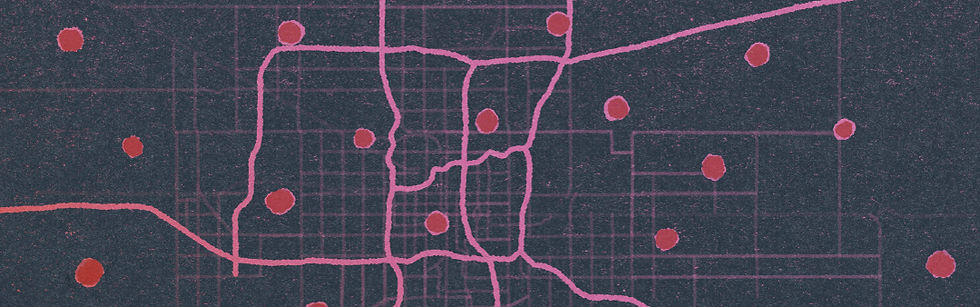
During a 2024 interim study, legislators and experts gathered to discuss harm reduction and its impact so far. Mike Walker, deputy chief of operations at Oklahoma City Fire Department and supervisor of the Overdose Response Team (ORT) was asked about what areas of Oklahoma City had the highest number of overdoses.
“It was all over the place, in every single zip code and in every single neighborhood... Even in the schools, it’s in the gated neighborhoods.” said Walker.
The ORT created a heatmap of overdose responses and according to Walker, “It looked like the city had chicken pox.”
Overdoses aren’t isolated incidents or concentrated in our bigger cities, like Tulsa and Oklahoma City. Overdoses don’t just happen within a certain demographic, income, or education level. One in four Americans know someone who struggles with opioid addiction and one in seven knows multiple people.
“There are a lot of times that when our team has responded, that is the first time that a family knew that their loved one was using opioids,” said Walker.
The most recent data from the CDC reports that 79,384 drug overdose deaths occurred across the United States in 2024.
Fentanyl, a powerful synthetic opioid, can be added to other drugs or illicit substances to increase their potency or cause a different kind of high for the user. In Oklahoma, Fentanyl was involved in about half of all overdose deaths in 2022, according to the Oklahoma Department of Mental Health and Substance Abuse Services.
Deaths involving fentanyl and deaths involving fentanyl used in combination with other drugs has dropped according to data from 2024. However, methamphetamine deaths and methamphetamine used in combination with fentanyl have increased and make up nearly 60% of the 1,196 overdose deaths in Oklahoma in 2024.
Oklahoma currently leads the nation in decreases in overdose deaths according to data from the CDC. From September 2023 to September 2024, Oklahoma had 1,089 reported overdose deaths. The state saw a steep decline in overdose deaths, dropping by about 41% to 649 deaths during the same months in 2025.
It is difficult to attribute the decrease to one thing, but experts believe the widespread distribution of naloxone to first responders and PWUD, another element of harm reduction efforts, contributed significantly.
When client encounters with harm reduction services sharply increased from 4,212 in April to December of 2023 to 14,677 in all of 2024, data from the Oklahoma State Department of Health (OKDH) indicates that overdose deaths decreased.
OKDH data also shows that of the total 41,094 client encounters recorded between April of 2023 and June of 2025, harm reduction sites provided 17,838 referrals to social and medical services. Given the social nature of referrals, the number of referrals provided is likely much higher according to OKDH.
Participants connected with harm reduction services also reported over 1,700 overdose reversals using naloxone. The number is very likely to be much higher because overdose reversal reports are sometimes difficult to obtain due to the traumatic nature of an overdose event.
These interventions are providing Oklahomans who use drugs another opportunity to achieve a healthier future. Interrupting the potential for harm and giving them a chance to live for another day.
Conclusion
We ought to use common sense when enacting legislation. Protecting the lives of Oklahomans should be a top priority for lawmakers. Harm reduction is as practical as it gets when it comes to safeguarding the futures of our neighbors who struggle with substance use disorder.
It’s simple. Medical professionals can’t be everywhere all the time. Providing people with Narcan to reverse the effects of an overdose can save lives even when medics aren’t there. Used syringes transmit diseases. Providing people with clean syringes reduces the risk of transmission and inherently encourages safer use. Drug use will happen whether we like it or not. Providing people with fentanyl test strips prevents overdose and avoids unintended death.
Harm reduction doesn’t just protect Oklahomans. It costs significantly less to provide safe use equipment than it does to treat diseases. These efforts aren’t a new and random experiment. It is a tried and tested evidence-based practice that works.


